


Prime Minister Andrew Holness says the alignment of the long-promised bypass around the historic town of Lucea will run approximately three kilometres south of the existing coastal roadway—an approach he believes will unlock the entire waterfront of Hanover Parish as prime resort lands.
Holness made the disclosure during his contribution to the 2026 Budget Debate at Gordon House in Kingston, outlining how the project could reshape the development landscape along Jamaica’s northwestern coastline.
For years, the main roadway linking Montego Bay and Negril has been plagued by traffic congestion, particularly in the historic coastal towns of Hopewell and Lucea.
The Prime Minister said the persistent bottlenecks along the corridor have implications that extend beyond daily commuter frustration.
“Anyone who has driven from Montego Bay to Negril knows the bottlenecks at Hopewell and Lucea. This is not just a quality-of-life frustration, it is an economic cost. Every hour of unnecessary journey time is a deterrent to tourism investment, a disincentive to the visitor’s experience, and a break on the development of Hanover’s enormous untapped potential,” Holness told Parliament.
The proposed bypass is intended to divert through-traffic away from the centres of both Hopewell and Lucea, allowing vehicles travelling between Montego Bay and Negril to move more efficiently along a modern highway corridor.
Holness said the development forms part of a broader strategy to open up Hanover for economic growth and investment.
“Hanover has so much potential, but it is, you know, almost like an interland in Jamaica. And in the same way that we have opened up St. Thomas, we will open up Hanover for development. The government will advance the Hopewell and Lucea bypass running through a connection point on the Long Hill bypass, which is already under construction in St. James, traversing westward, serving both Hopewell and Lucy before terminating on the westward side of Lucea,” the Prime Minister said.
The new roadway will connect with the Long Hill bypass, currently under construction in St. James Parish, creating a faster inland route linking the tourism hubs of Montego Bay and Negril.
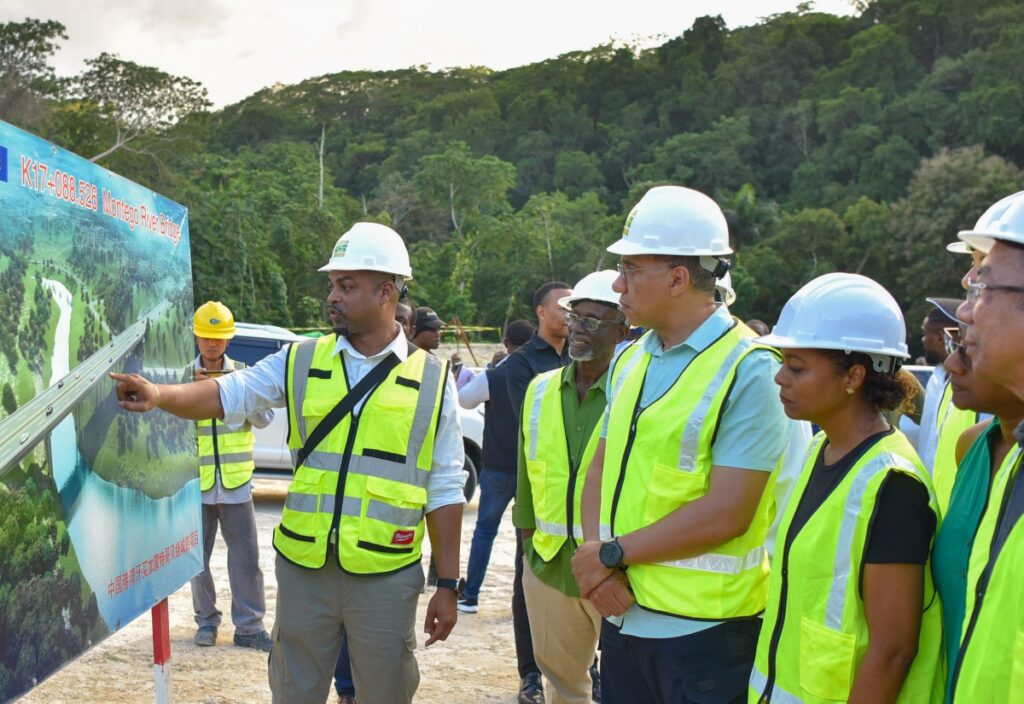
Holness had first outlined details of the project during his 2024 Budget Debate presentation, when he revealed that the bypass would be designed as a four-lane highway.
At that time, he explained that the road would begin at a separate intersection along the Long Hill bypass before extending westward for approximately 30 kilometres. Link roads would connect the new highway to the existing road network before and after the towns of Hopewell and Lucea.
A key feature of the alignment is its distance from the existing coastal highway.
By routing the new roadway several kilometres inland, large sections of Hanover’s coastline could potentially become available for tourism-related development. Holness suggested that this approach could open up the waterfront corridor between Montego Bay and Negril for resort investment and other tourism projects.
The Prime Minister also pointed to the historical origins of the traffic challenges in Hopewell and Lucea.
Both towns, he noted previously, date back hundreds of years to a time when transportation consisted mainly of horse and buggy. As a result, their narrow streets and historic layouts were never designed to accommodate the heavy volume of modern vehicular traffic that now moves along Jamaica’s northern tourism corridor.
Today, the coastal route serves thousands of daily commuters, tour buses, delivery trucks and rental vehicles travelling between Montego Bay and Negril, creating congestion that can significantly slow travel times.
The proposed bypass is expected to reduce that congestion by allowing through-traffic to avoid the town centres entirely.
If realized, the project could significantly improve travel efficiency between Montego Bay and Negril while creating new opportunities for tourism development along one of Jamaica’s most scenic stretches of coastline.
For residents of Hanover and stakeholders in the tourism industry, the announcement signals renewed momentum behind a project that has long been discussed as a key element of the parish’s future economic growth.