

By Claudia Gardner:
For many Jamaicans and tourists travelling along the main road in Johnson Town, Lucea, the stretch of highway near Riley Bridge may appear like any other rural roadway in western Jamaica.
But film lovers and long-time residents know the location holds a remarkable piece of cinematic history.
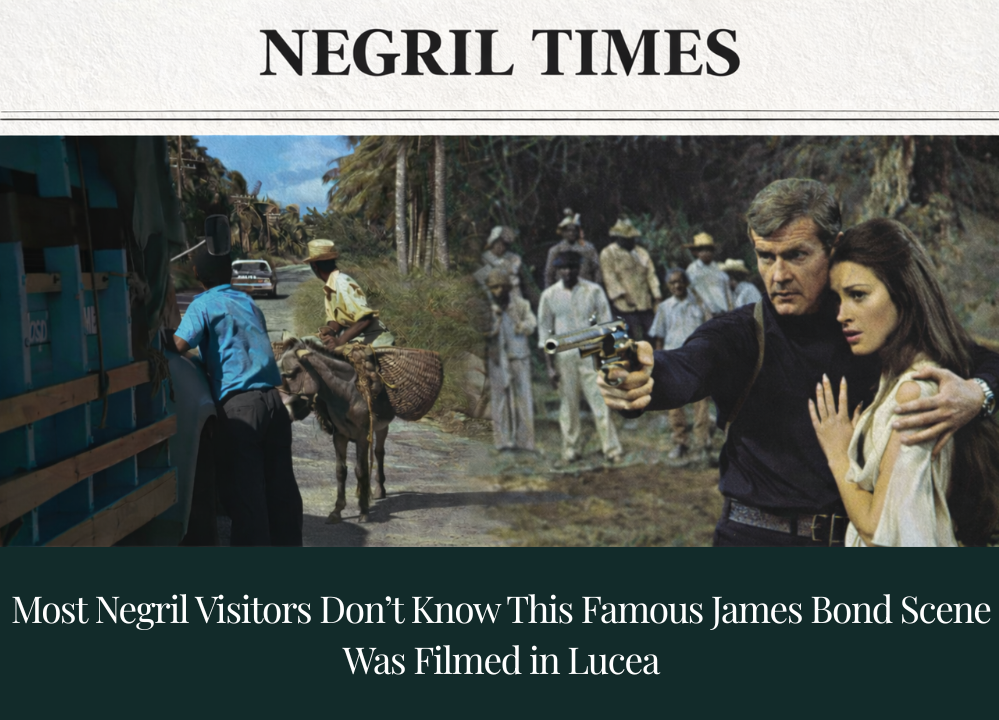
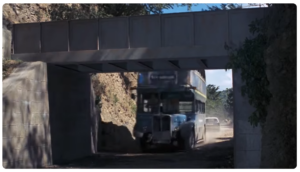
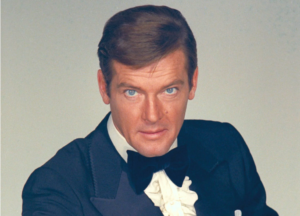
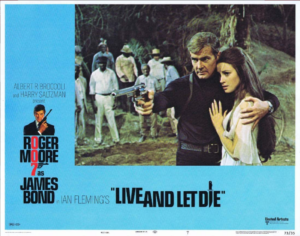
More than five decades ago, the quiet community in Hanover became the setting for one of the most memorable chase scenes in the James Bond franchise. In the 1973 classic Live and Let Die, British secret agent James Bond—played by Roger Moore—dramatically escapes pursuing police officers by driving a double-decker bus under a low bridge, slicing off the top deck of the vehicle in spectacular fashion.
That famous stunt was filmed in Johnson Town, Lucea, just footsteps away from the Riley Bridge.
December 7, 1972: When Hollywood Came to Hanover
The dramatic scene was filmed on Thursday, December 7, 1972, when production crews transformed the rural Hanover roadway into a high-energy movie set.
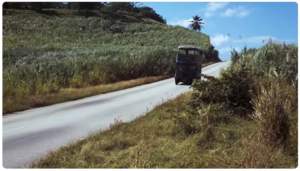
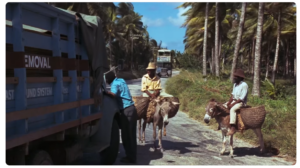
In the sequence, Bond commandeers a double-decker bus and speeds through the fictional Caribbean island of San Monique while being chased by police officers on motorcycles.
During the chase, several of the officers lose control and are thrown off their bikes into the sea and nearby cane fields.
Those moments were filmed at Point Estate in Lucea, an area that today bears little resemblance to what it looked like in the early 1970s. The location is now home to an all-inclusive hotel and the Ocean Pointe housing scheme, a gated residential community along the coast. According to locals who remember the filming, the area was once open land and cane fields stretching toward the sea.
Locals Recall the Excitement
For residents who lived in the area at the time, the filming remains an unforgettable moment in the community’s history.
Winston Kerr, who lived in Johnson Town during the production, recalled working on equipment used to deconstruct the bridge structure after the stunt was completed.
“The machine that they used to lift off the bridge after di show, I was on dat machine,” he said.
Kerr also remembered an unusual incident involving Roger Moore. According to Kerr, during one day of filming the international star was chased by dogs from the community but managed to escape unharmed—an unexpected moment of excitement off camera.
“When him climb di hill and come through here suh, di dog teck him,but mi neva si how him get weh. ,” Kerr added.
Seeing Their Home on the Big Screen
Another resident, Anthony Miller, said watching the film years later was a thrilling experience because he recognized many of the locations where he spent his childhood.
“This is where I grew up as a child,” Miller said while pointing out sections of the roadway and river while viewing the film on a smartphone. He explained that the area near the Riley River was once a place where local children rode bicycles, played games and spent time along the riverbanks.
“We used to play hopscotch and ride bicycle right here,” Miller said.
Seeing those familiar surroundings appear in a major Hollywood production made him proud.
“It made me feel good knowing that a James Bond movie was filmed right here in my town,” he said.
The Bus That Came From London
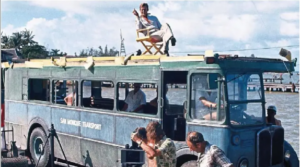
Central to the famous bus chase scene was an AEC Regent III double-decker bus, once used on London’s Route 19.
The vehicle was shipped across the Atlantic to Jamaica specifically for the film’s production.
Reports indicate that the bus left Pinewood Studios in England and travelled to Liverpool docks on September 19, 1972 before being transported to the Caribbean for filming.
To ensure authenticity, Roger Moore himself received training to drive the double-decker vehicle.
The lessons were provided by Maurice Patchett, a veteran London bus driver with 12 years of experience. Patchett was flown to Jamaica for four weeks and had spent months preparing Moore for the stunt, including practice sessions on a special skid pad in England.
But when it came time for the dramatic bridge stunt in Johnson Town, Patchett himself took over driving duties.
Engineering the Perfect Stunt
The bridge used in the scene had to be specially prepared.
The top section of the bus was carefully removed and mounted on rollers so that it would detach cleanly when the vehicle struck the bridge.
The stunt driver accelerated the bus to precisely 30 miles per hour, striking the low structure and sending the upper deck flying off exactly as planned.
The stunt was executed perfectly on the first take, meaning the backup bus that had been transported to Jamaica was never needed.
A Chase That Ends by the River
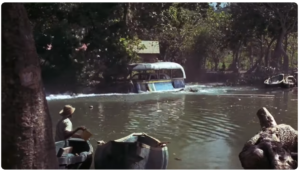
The chase sequence in the film moves through Point Estate and the Johnson Town main road Lucea before ending near the river area.
At Point Estate, the police officers pursuing Bond are thrown into the water after losing control of their motorcycles.
The double-decker bus, after losing its top, along with several of the chase vehicles plunge into the water during the dramatic sequence.
A Massive Action Production
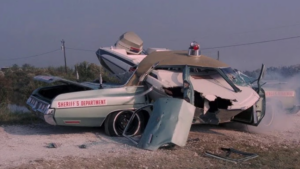
The filming of the Jamaica scenes involved an enormous amount of stunt work and destruction.
During four weeks of action filming, the production reportedly destroyed 14 cars, 21 speedboats, eight aircraft and a double-decker bus.
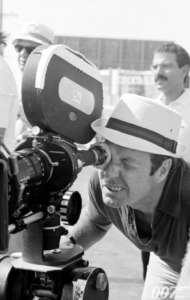
The scale of the action reflected the ambition of the film’s director, Guy Hamilton, who chose Lucea as one of the main filming locations after scouting sites across the island.
Hamilton believed the rugged coastline, bridges and countryside of Hanover would provide the perfect setting for Bond’s Caribbean adventure.
Hanover’s Overlooked Film History
Despite its starring role in one of the most famous spy films ever made, Hanover’s contribution to international cinema is often overlooked.
Yet the parish’s natural scenery—its rivers, bridges, hills and coastline—played a major role in bringing the fictional Caribbean island of San Monique to life on screen.
More than 50 years later, Johnson Town and the surrounding areas remain largely unchanged, quietly preserving the memory of the day when a London double-decker bus sped beneath a Hanover bridge and created one of the most unforgettable scenes in James Bond history.