

By Claudia Gardner:
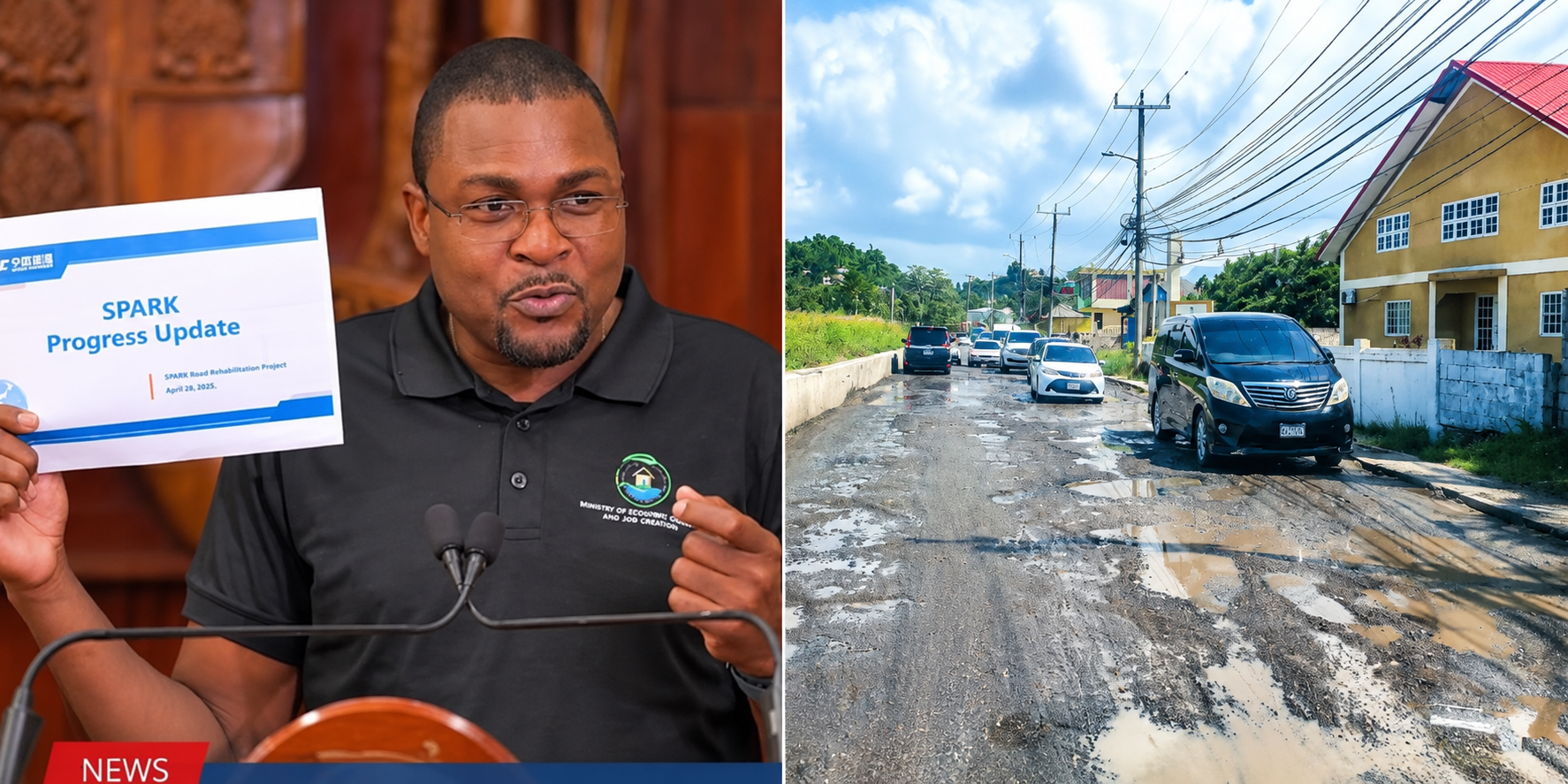
After years of complaints and lobbying by the Negril Chamber of Commerce about the Great River-to-Negril roadway — a road that has tested the suspension, patience and vocabulary of motorists, the Government has outlined plans to rehabilitate the battered corridor which runs through Hanover and into Western Westmoreland.
The plans, outlined by Minister without Portfolio in the Ministry of Economic Growth and Infrastructure Development with responsibility for Works, Robert Morgan during a Post-Cabinet Press Briefing today, place the corridor which runs through several of Hanover’s towns, among the major beneficiaries of the $25-billion SPARK Main Roads investment. The programme covers 37 priority roads across 10 parishes and is expected to benefit more than 900,000 Jamaicans.

The roadway has become a nightmare for drivers, residents, businesses and visitors, but, according to Morgan, the planned intervention could represent the most consequential road works undertaken in the area in years.
“We have received a lot of complaints from tourism interests in Hanover, so we’re also going to be starting in October Great River to Sandy Bay…Hanover is one of the biggest beneficiaries of the SPARK Main Road programe. We’re doing Great River to Sandy Bay, Sandy Bay to Lucea, Lucea to Green Island, and also… Lucea to Green Island. So that is three sections, and this will alleviate some of the challenges that our tourism interests have been having,” Morgan told the media.
The Government’s published programme confirms the inclusion of Great River-Sandy Bay, Sandy Bay-Lucea, Lucea-Green Island and Green Island-Parish Border in Hanover, with Parish Border-Negril listed under Westmoreland, and according to Morgan, work will proceed in stages, beginning not necessarily with excavation, but with design, soil testing and other pre-infrastructure activities.
“So the first road that we’re going to start under this SPARK Main Road programme is the Montego Bay to Great River section, which is the Reading section… Next year, January, Lucea to Green Island. February, Hanover – Green Island to Parish Border…. So if you look at the Hanover plan, we’re fixing all the way from Montego Bay, Reading, going all the way to Parish Border and beyond,” Morgan said.
In Westmoreland, the next major link is scheduled for May 2027 “running from the parish order to Negril” accoring to the Minister.
“So if you look at what we’re doing in Hanover, starting from Montego Bay going all the way to Negril, we’re going to do almost all of Hanover,” he pointed out.
Morgan said that for Negril, where deteriorating sections of the North Coast Highway have become a persistent concern for residents, commuters, tourism operators and visitors, the planned infrastructural works “represent the most significant investment in our country’s infrastructure cumulatively since our independence”.
“We’ve intervened at that time, but we have not really done any significant work on the North Coast Highway since- it was built in the 90s… We’re going to do a big section of St. James. We’re going to go to Negril. That is going to give us a 15-year road,” he explained.
The Main Roads programme comes on top of the wider SPARK Community Roads component. Morgan said 110 roads have already been fully paved, with another 225 in the process of being paved. Ten work orders cover 403 roads, which will include the 37 main-road projects.
The Andrew Holness-led government says more than 300 roads have already been brought under SPARK, with more than 25 local subcontractors working alongside China Harbour Engineering Company.
Approximately $11.22 billion has so far been spent on the local and community roads from March 2025 to September 2026, while the 37 main-road projects represent a $25-billion national investment.
The programme is also expected to include 55 vehicular bridges and three pedestrian bridges. The SPARK programme is scheduled to expire in the final quarter of 2028, creating a three-year window for the main-road works to be completed.