

By Claudia Gardner:
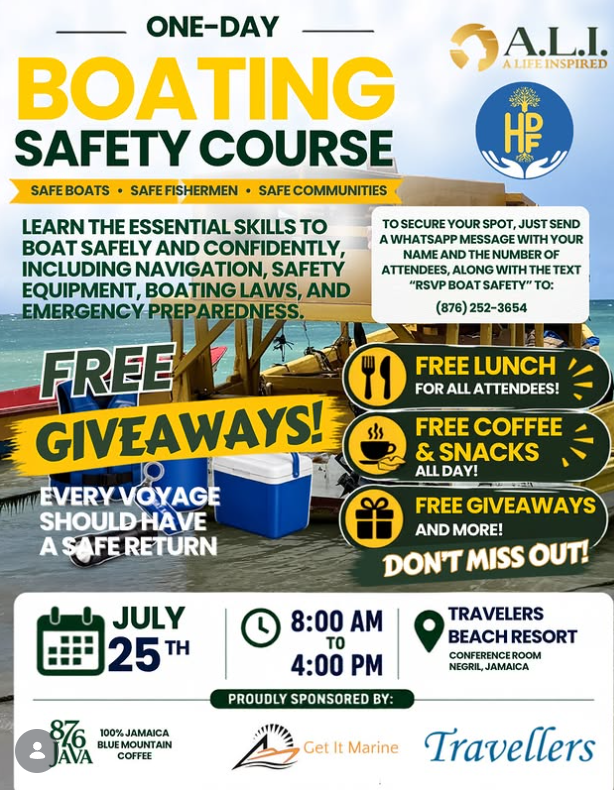
NEGRIL, Jamaica — Nine months after the devastation caused by Hurricane Melissa, a Negril-based non-profit organisation A Life Inspired (A.L.I.) is still continuing its commitment to Jamaica’s fishing communities with a free One-Day Boating Safety Course scheduled for Saturday, July 25, from 8:00 a.m. to 4:00 p.m. at Travellers Beach Resort in Negril.
The full-day training is open to fishermen, fishing captains, aspiring fishermen and anyone who spends time on the water. Participants will receive instruction in safe navigation, boating laws, emergency preparedness, vessel safety and best practices designed to reduce accidents at sea. The event also includes complimentary lunch, coffee, snacks and giveaways.
According to Hassan Malik, one of A.L.I.’s directors, the course is part of a much larger effort that began immediately after Hurricane Melissa devastated fishing communities across western Jamaica.
“It goes back to the dreaded day of the hurricane,” Hassan explained. “Being a non-profit organization whose goal is to help, support and strengthen communities, we looked at the different demographics that were harmed the most. Negril is a maritime community, and when we carried out our needs assessments we found the fishermen were among those who needed immediate help.”
Hassan said A.L.I.’s hurricane response was guided by comprehensive needs assessments in which fishermen identified, both verbally and in writing, the assistance they needed most. The consultations revealed that many had lost virtually everything, prompting the organization to move quickly with targeted relief efforts.
The first phase of A.L.I.’s recovery initiative centered on providing emergency relief, with assistance tailored to the priorities identified by fishermen during the organization’s needs assessments. Hassan said replacement boat engines emerged as the most pressing requirement, followed by fiberglass for repairing damaged vessels and other essential fishing gear needed to help fishermen return to work.
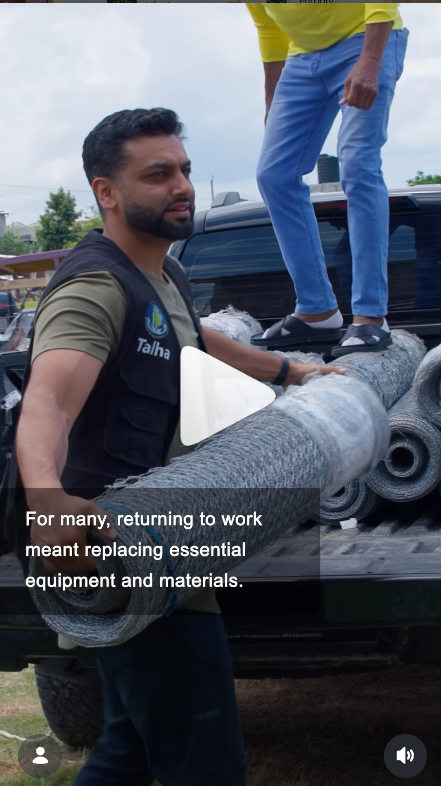
“Believe it or not, the captains needed new engines. They had lost their boats and engines. They also needed fiberglass to repair damaged boats, along with fishing pots, hooks and virtually every piece of equipment required to get back on the water,” Hassan said.
The organisation also purchased and distributed thousands of chicks to help farmers restock their coops and rebuild their livelihoods. While acknowledging the work that has since been undertaken by the Government of Jamaica, Hassan said community organizations still have an important role to play.
“The government has stepped in and has done a great job, but it cannot do everything. We see ourselves as assistants to the government. Governments need their people to help, ” he noted.
The upcoming boating safety course represents Phase Two of A.L.I.’s four-phase recovery initiative. Rather than focusing solely on replacing equipment, this phase emphasizes education and accident prevention.

Between May and June alone A.L.I, in partnership with US-based Muslim organisation Human Development Fund (HDF), invested more than J$4.8 million (over US$30,000) to support fishermen and their families in Negril, Whitehouse and surrounding communities. Through the initiative, the organizations have provided vital assistance, including boat engines, life jackets, fishing pots, nets and lines, coolers, storage equipment, and other essential fishing tools and supplies to help affected fishermen recover and return to their livelihoods.
“All professionals have continuing education. Whether you’re a doctor, lawyer or nurse, there is ongoing training. We believe fishermen deserve the same opportunity to refresh their knowledge and improve safety,” Hassan explained, noting that the programme has taken on even greater significance following recent boating incidents.
“From what we’ve heard from subject matter experts and the Coast Guard, many rescues and unfortunate losses are directly related to a lack of understanding about boating safety. Sometimes experienced captains become complacent after twenty years on the water. Continuing education provides important reminders that can save lives,” he added.
In addition to expert instruction on boating safety, participants will receive safety-related equipment and other giveaways aimed at encouraging safer practices on the water. Hassan said the training will also help shape A.L.I.’s next phase of assistance by giving the organization an opportunity to engage with more fishermen and identify their evolving needs.
While registration has been slower than expected, organizers remain confident that interest will grow as the event draws closer, particularly as awareness of the free training continues to spread.
“We’re hoping it picks up at the last minute,” Hassan said. “Our goal is to livestream the course so fishermen across Jamaica—not just those in Negril—can benefit from the information.”
Hassan said the training is open to both experienced fishermen and those interested in entering the industry, stressing that boating safety should be learned before heading out to sea. He added that A.L.I. is expanding its outreach to communities such as Green Island and Lucea and is encouraging local leaders and residents to help spread the word. The initiative, he said, forms part of the organization’s ongoing commitment to supporting Jamaica’s fishing communities.
“Our goal is to continue supporting fishermen over the coming years. The more people we reach, the more we can help strengthen these communities and make every voyage a safer return home,” he said.